Skystrike
I began this solo project during my final year at Gnomon to bridge my technical art skills between the 3D pipeline and in-engine game development. Built using Unreal Engine 5 Blueprints, this project translates rigging, animation, and object-oriented architecture into dynamic character locomotion, decoupled directional free-aim, precision raycast shooting, and a modular spatial grid-based inventory system.
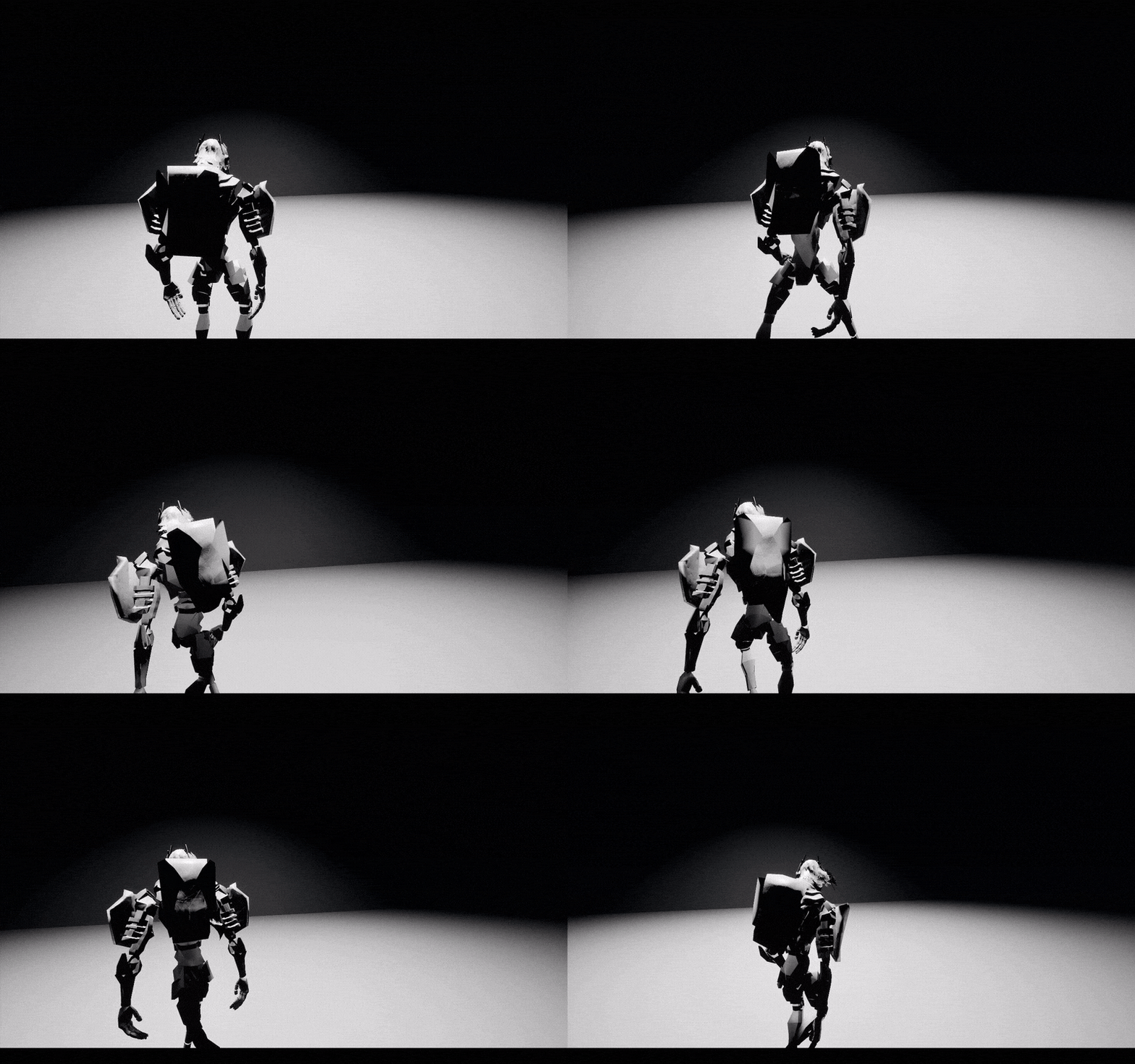
Character hair runs on a lightweight cloth simulation applied to a low-poly proxy mesh, which high-density hair cards follow by vertex weight transfer. This hybrid approach eliminates simulation overhead while adding tangible visual life and physical weight to fast-paced character turns.
The base character locomotion overlays a finely tweaked 2D blendspace driving the base ground locomotion state machine. Physics details and natural secondary momentum are computed via bone transforms, inverse kinematics (IK), and performant secondary animation nodes within the Unreal Animation Blueprint.
Traditional third-person action cameras strictly lock character orientation to the screen viewport. For Skystrike, I engineered an optional decoupled free-aim system to support methodical, tactical shooting in enclosed spaces without camera disorientations.
Mouse and analog controller axes drive a free-moving crosshair across the viewport while the character torso, weapon socket, and spine bones procedurally track target coordinates in 3D world space rather than locking to the screen center.
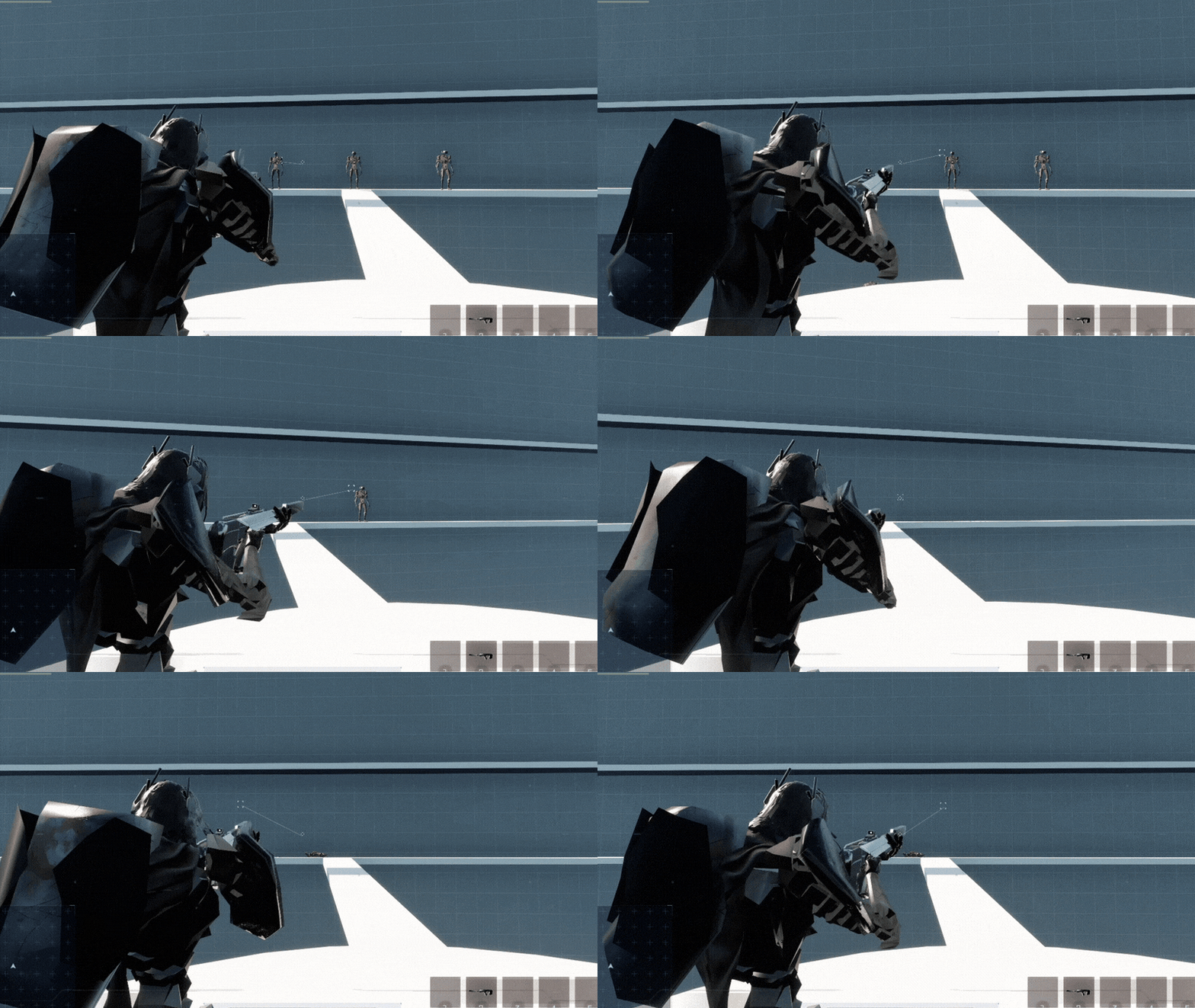
In a free-aim setup where the player can fire across arbitrary screen angles, combined with a real-time shoulder swapping mechanic that flips horizontal view origins, hit detection must be calculated based on the constantly varying vector from the weapon to the cursor/crosshair.
The primary trace projects from the viewport camera to identify the intended crosshair intersection, followed immediately by a secondary trace from the physical weapon muzzle socket to the impact point.
Modular Architecture & UMG Framework
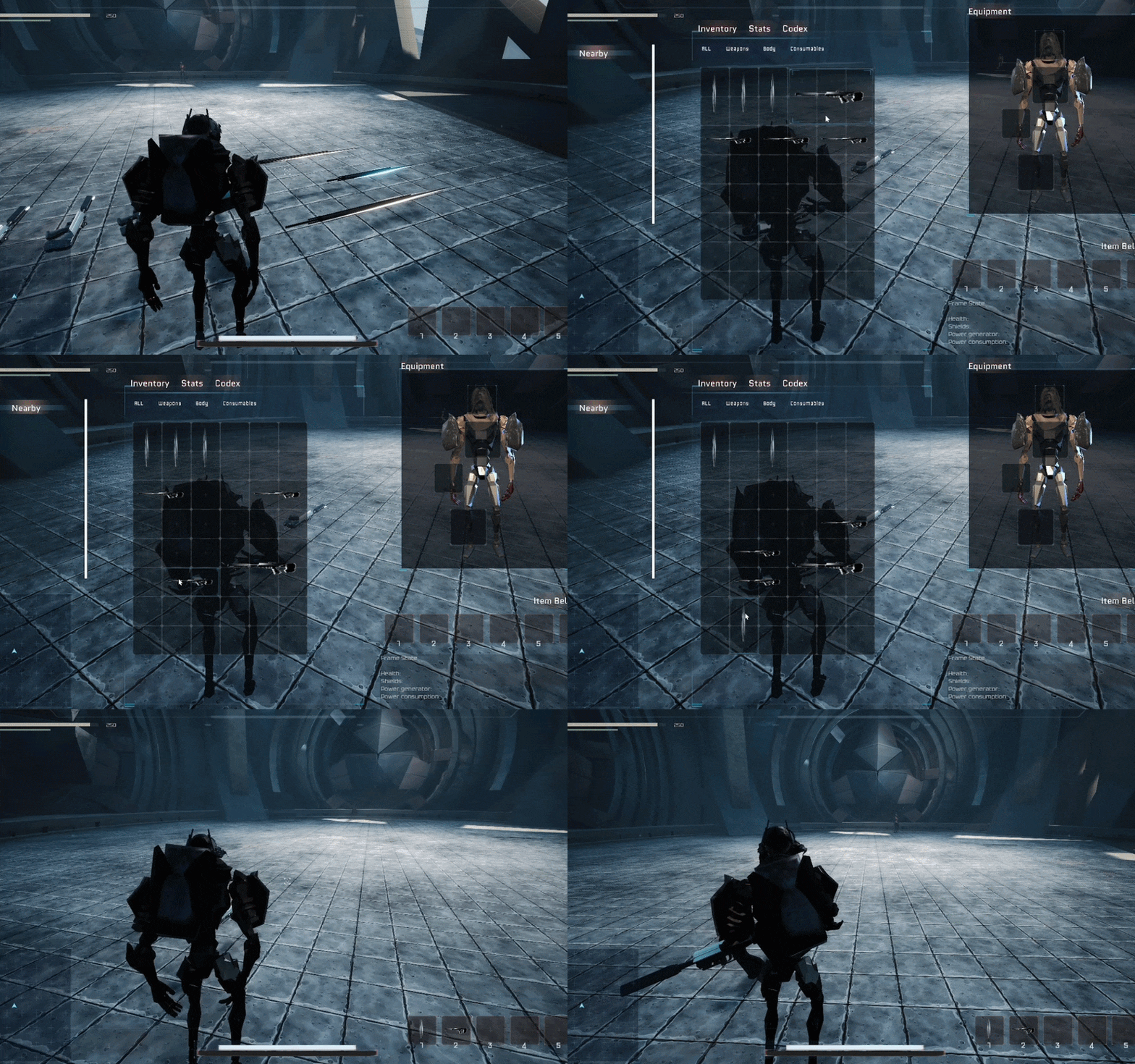
Built completely in Blueprints, the inventory system replicates full spatial grid management with dynamic slot allocation, multi-cell item dimensions (1×1, 1×2, 2×3), and drag-and-drop support.
◆ Data-Driven Structs
Item parameters including UID, display name, 2D UI thumbnails, 3D world meshes, and stat attributes are consolidated into standardized Custom Item Structs for rapid designer balancing.
◆ Blueprint Inheritance
Through parent-to-child inheritance from a top level 'Master Item' using Struct data to store properties, into sub-objects such as 'Ranged Weapon'-> specific rifle variants, new equipment can be authored in seconds without replicating backend logic.
◆ Interface Communication
To prevent hard object references and memory bloat, loot logic relies on Blueprint Interfaces. When raycast traces hit an interactable, the interface transfers data safely before destroying the world actor.
◆ 2D Coordinate Grid Engine
The UMG UI grid initializes dynamic rows and columns via nested loops, assigning exact (X, Y) coordinates to each cell (in the grid) to validate drag-and-drop placement bounds.
Skystrike bridges visual art production with robust gameplay systems engineering. By decoupling visual flourishes from collision traces and pairing data-driven Blueprint inheritance with dynamic state machines, the character provides instantaneous combat feedback while maintaining high visual polish in Unreal Engine 5.